
 par Charles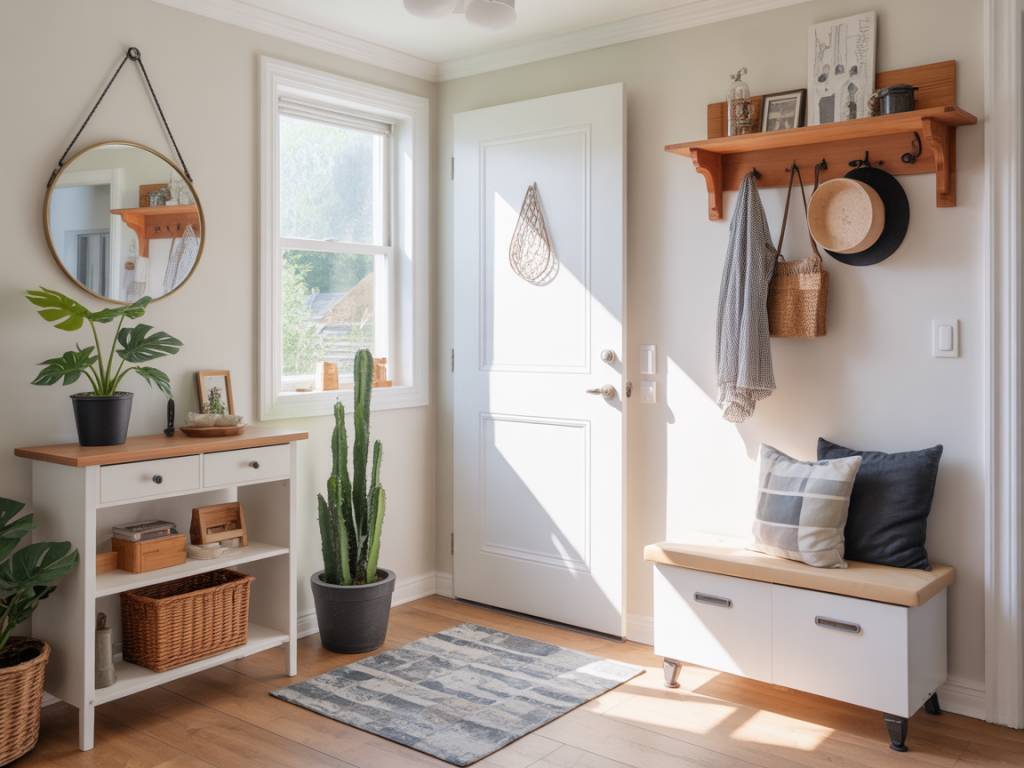
Why Small Entryway Design Matters in a Tiny Home
A small entryway can shape the way an entire home feels. In a tiny home, the first few square feet near the door often have to work harder than any other area. This is where shoes pile up, keys disappear, coats get dropped, and everyday clutter starts to build. When the entryway is well planned, however, it can do more than store essentials. It can make the whole space feel brighter, calmer, and more open.
The best small entryway ideas focus on visual lightness, smart storage, and clean movement. That means choosing pieces that serve more than one purpose, using vertical space, and avoiding bulky furniture that blocks the flow. Even a compact foyer or narrow hallway can feel intentional when the layout is thoughtful and the finishes are cohesive.
Use a Narrow Console Table to Create a Functional Drop Zone
A slim console table is one of the most practical small entryway furniture ideas. It gives you a place to set mail, keys, sunglasses, and other items you use daily, while keeping the footprint minimal. A narrow profile is important. In a tiny home, even a few extra inches can affect how open the area feels.
Choose a console with an airy base, such as open legs or a floating design, so the floor remains visible. That visual openness helps prevent the entry from feeling crowded. Pair the table with a tray or a shallow bowl to keep small objects organized. If you want extra utility, look for a console with a lower shelf for baskets or shoes.
Install Wall Hooks for Vertical Entryway Storage
Wall hooks are a simple upgrade that can dramatically improve small entryway storage. They keep jackets, tote bags, hats, and umbrellas off chairs and floors, which instantly reduces clutter. In compact homes, vertical storage is essential because it frees up precious floor space.
For the best effect, mount hooks at a comfortable height and space them evenly. A row of matching hooks creates a streamlined look, while mixed materials such as wood and metal can add warmth and texture. If you want a more polished appearance, consider a wall-mounted peg rail or a hook board that blends into the decor.
- Use sturdy hooks that can hold heavy coats and bags
- Choose finishes that match your hardware for a cohesive look
- Place hooks near the door for quick access
Choose a Large Mirror to Make the Entryway Feel Bigger
Mirrors are one of the most effective small entryway decor ideas because they reflect light and expand visual space. A large mirror above a console table or bench can make a tiny foyer feel wider and more open. It also serves a practical purpose, letting you check your appearance before leaving the house.
Round mirrors soften narrow spaces, while rectangular mirrors can emphasize height and structure. Frameless styles feel especially light, but a thin frame in wood or metal can add definition without overwhelming the wall. For homes with limited natural light, placing a mirror opposite a window or light source can make the entryway feel noticeably brighter.
Opt for a Storage Bench with a Slim Profile
A storage bench is useful when you need a place to sit while putting on shoes, but in a tiny home, the design must remain compact. A bench with hidden storage can reduce clutter and provide a designated home for seasonal accessories, slippers, or pet items. It also helps the entryway feel more organized at first glance.
Look for a bench with a narrow depth and a light visual weight. Upholstered options can feel inviting, while wooden designs create a cleaner, more structured look. If the entryway is extremely tight, a wall-mounted bench or a bench without arms may be the best choice. The goal is to add function without creating a blockage.
Use Light Colors to Open Up a Small Foyer
Color has a major effect on how spacious a room feels. In a small entryway, light colors can help walls recede and make the area feel less enclosed. Soft white, pale beige, warm gray, and muted sage are all strong choices for compact spaces. They reflect more light than darker tones and create a calmer first impression.
This does not mean the space has to feel plain. You can add interest through texture, artwork, baskets, and layered materials. A subtle contrast between the walls, trim, and furniture can define the space without making it feel busy. If you prefer bolder color, use it in small accents rather than on every surface.
Pick Multifunctional Entryway Furniture for Tiny Homes
Multifunctional furniture is essential in tiny home entryway design. Every piece should ideally solve more than one problem. A bench with shoe storage, a mirror with a shelf, or a console with drawers can all reduce the need for extra furniture elsewhere in the home.
When evaluating pieces, consider depth, storage capacity, and visual openness. Furniture that sits on legs often looks lighter than blocky pieces that touch the floor. Open shelving can also make a compact area feel less heavy, though it works best when kept tidy. In a small entryway, design choices should support both order and ease of use.
- Look for storage benches with lift-up seats
- Choose consoles with drawers for small essentials
- Select slim shoe cabinets that keep footwear out of sight
Keep the Entryway Floor Clear with Smart Shoe Storage
Shoes on the floor are one of the fastest ways to make a small entryway look cramped. A dedicated shoe storage solution can improve both appearance and function. In a tiny home, even a compact shoe cabinet or under-bench basket can make the area feel much more orderly.
For everyday use, low-profile shoe racks work well when placed inside a closet or behind a door. Closed storage is often better in a visible entry because it reduces visual clutter. If you need a quick-access setup, choose a piece that lets shoes dry and air out while still keeping them contained. The result is a cleaner, more spacious-looking entry.
Maximize Wall Space with Shelves and Small Organizers
When floor space is limited, the walls become valuable real estate. Floating shelves, slim wall ledges, and compact organizers can help create an efficient small entryway without adding bulk. These pieces are especially useful for mail, candles, decorative objects, and daily essentials that would otherwise end up scattered around the home.
The key is restraint. A few well-chosen items will look more intentional than a crowded arrangement. Keep shelf styling simple and leave enough open space so the wall does not feel overloaded. Wall organizers with slots for mail, sunglasses, and notes can also help create a designated landing zone that supports everyday routines.
Use Rugs and Lighting to Define a Small Entry Space
Even in an open-plan tiny home, rugs and lighting can help define the entryway. A small rug can visually anchor the space and create a clear transition from outdoors to indoors. Choose a pattern or texture that hides dirt well while still adding warmth and personality. The rug should be proportionate to the area so it does not overwhelm the floor.
Lighting is equally important. A pendant light, wall sconce, or small table lamp can make the entry feel welcoming and layered. Good lighting also reduces the sense of confinement that can happen in compact spaces. If the entryway lacks natural light, consider warm bulbs and reflective surfaces to make the area feel more open and inviting.
Decorate with Intentional Simplicity for a Spacious Feel
In a small entryway, the most effective decor often comes from simplicity. A few carefully chosen pieces can create a polished look without adding visual noise. Think of a framed print, a ceramic bowl, a single branch in a vase, or a textured basket. These elements add character while preserving the feeling of openness.
Keep the style consistent with the rest of the home. A cohesive palette and repeated materials can make the entryway feel connected to nearby rooms, which helps the home read as larger overall. Avoid overcrowding the space with too many decorative accessories. Negative space is valuable. It gives the eye room to rest and allows the entryway to feel clean, calm, and spacious.
How to Create a Bigger-Looking Entryway in a Tiny Home
The most successful small entryway ideas combine storage, light, and restraint. A tiny home does not need a large foyer to feel well designed. It needs a thoughtful one. By using slim furniture, vertical storage, reflective surfaces, and a limited color palette, you can create an entryway that feels functional and open at the same time.
Whether you are furnishing a narrow hallway, a compact mudroom corner, or a minimal foyer by the front door, the same principles apply. Keep pathways clear. Choose pieces that earn their place. Let the design feel airy rather than heavy. With the right choices, even the smallest entryway can make a strong and spacious first impression.