


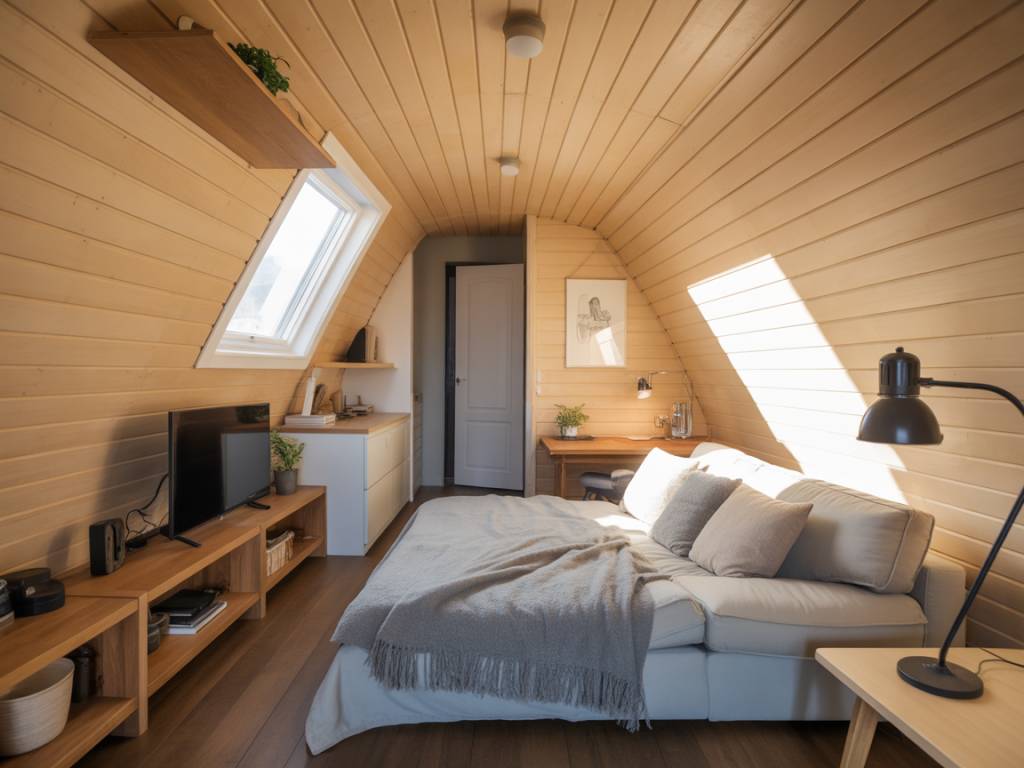
Why Smart, Space-Saving Lighting Matters in a Tiny Home
Lighting can make or break a tiny home. It impacts how large your space feels, how practical each zone is, and even how you experience everyday rituals like cooking or reading. In a small footprint, every centimetre counts, so choosing the right space-saving lighting ideas becomes essential rather than optional.
Good lighting does more than simply brighten a room. It visually pushes back the walls, defines functions within an open-plan layout, and creates a sense of depth and height. Poor lighting, on the other hand, makes a tiny home feel cramped, cluttered, and flat. With a strategic combination of layered light, compact fixtures, and smart technology, you can transform even the smallest cabin, studio, or van conversion into a bright and welcoming retreat.
Planning a Space-Saving Lighting Layout for a Tiny Home
Before buying any lamp or fixture, take a step back and map out how you actually use your tiny home. This simple planning phase will help you choose the most effective space-saving lighting solutions and avoid unnecessary clutter.
Think in terms of three layers of light:
- Ambient lighting – the general, overall light that makes the space feel open and usable.
- Task lighting – focused beams for specific activities such as cooking, working, grooming, or reading.
- Accent lighting – decorative or directional light that highlights textures, art, plants, or architectural details.
In larger homes these layers often overlap without much planning. In a tiny home, you usually need fixtures that can work double or triple duty. A single wall-mounted fixture may act as ambient lighting in the day, task lighting above a desk, and a softer mood light in the evening, depending on the bulb and dimmer you choose.
Wall-Mounted Lighting to Free Up Floor and Surface Space
When floor and table surfaces are limited, wall-mounted lights become some of the most valuable tools in a tiny home. They keep pathways clear, surfaces free for daily activities, and visual clutter to a minimum.
Consider these wall lighting ideas for small spaces:
- Adjustable swing-arm sconces – Perfect next to a sofa, reading nook, or bed in a loft. They fold flat against the wall when not in use and pull out when you need focused light.
- Plug-in wall lights – Ideal if you rent your tiny home or don’t want to run new wiring. They screw to the wall but plug into a standard outlet, making them easy to move or upgrade.
- Wall-mounted reading lights – Slim LED reading lights near bunks or loft beds free up precious bedside space while offering directional beams that won’t disturb anyone else.
To visually expand the room, choose wall lights with slim profiles, simple shapes, and finishes that echo your hardware or window frames. In very small interiors, repeating the same fixture style in different zones helps the eye read the space as calm and cohesive rather than busy and cluttered.
Recessed and Flush-Mount Ceiling Lights for Low Ceilings
Many tiny houses and micro-apartments have low ceilings, exposed beams, or loft platforms that make bulky pendant lights impractical. This is where recessed lighting and flush-mount fixtures shine, both literally and figuratively.
Recessed LED downlights are especially effective because they sit within the ceiling cavity. They offer ample ambient light without taking up headroom or visual space. In a tiny home, they can be installed along circulation paths, above the kitchen counter, or in the bathroom to create a clean, streamlined look.
Where recessed fixtures aren’t possible, ultra-slim flush-mount lights achieve a similar effect. Modern LED designs are shallow, energy efficient, and available in various diameters and colour temperatures. Opt for a warm white (around 2700K–3000K) if you want your small home to feel cosy, or a neutral white (around 3500K–4000K) for a brighter, more contemporary atmosphere.
Space-Saving Pendant Lighting Over Key Zones
Pendants still have a place in tiny homes, especially above kitchen islands, compact dining tables, or narrow breakfast bars. The key is proportion and placement. Oversized, low-hanging lights can dominate a small volume, while small-scale pendants or linear fixtures draw the eye vertically and help define functional zones without overcrowding.
When used thoughtfully, pendant lights offer several advantages in small spaces:
- They provide focused task lighting for cooking, eating, or working.
- They visually anchor multi-use areas, helping separate the kitchen, dining, and living spaces in an open-plan tiny home.
- They can add character and style without requiring any floor or wall space.
If your ceiling is low, look for compact, drum-shaped pendants or sleek linear bars. Suspend them as high as you comfortably can while still providing useful light on the surface below. Where code and safety allow, track lighting with adjustable heads can be a flexible alternative, letting you direct light exactly where you need it without adding multiple separate fixtures.
Under-Cabinet and Shelf Lighting to Maximise Work Surfaces
Under-cabinet lighting is one of the most efficient space-saving lighting ideas for small kitchens and workspaces. In a tiny home, every square inch of countertop matters, and shadows cast by upper cabinets can make food preparation or craft work difficult.
Slim LED strips or puck lights fitted under cabinets or shelves bring light directly where you use your hands:
- Kitchen counters – Illuminate chopping zones and sink areas, reducing the need for extra lamps.
- Fold-down desks or tables – Add a strip under the wall-mounted shelf above a compact workstation so light appears only when you need it.
- Open shelving – Highlight glassware, cookbooks, or decorative items while creating a gentle, diffuse glow that doubles as ambient evening light.
Many under-cabinet LED systems are available as plug-in kits or battery-powered options, making installation straightforward in a tiny house on wheels or a rental studio. Choose diffused LED strips rather than visible diode dots for a cleaner, more finished look.
Multi-Functional and Folding Lights for Flexible Tiny Living
A tiny home is rarely static. Dining areas turn into workspaces, sofas become beds, and outdoor decks become evening lounges. Lighting that can adapt quickly to these shifts is especially valuable in compact spaces.
Consider incorporating multi-functional and folding lighting options such as:
- Clamp lamps – Attach them to shelves, headboards, or rails. Move them easily from the kitchen to the desk or to a reading chair when necessary.
- Foldable wall lamps – Some designs collapse almost flat and swing out on an arm when you need direct light for tasks or hobbies.
- Rechargeable portable lamps – Place them on a narrow ledge or carry them outside without worrying about outlets. They’re particularly helpful in off-grid tiny homes.
Multi-purpose lighting reduces the total number of fixtures you need to buy and install. This, in turn, saves both money and visual space, while keeping your tiny home lighting scheme flexible and future-proof.
Using Mirrors and Reflective Surfaces to Amplify Light
One of the simplest ways to make a tiny home feel bigger without adding extra fixtures is to amplify the light you already have. Mirrors and reflective surfaces are powerful tools in a small-space lighting strategy.
Here are some effective techniques:
- Place a large mirror opposite or adjacent to a window to bounce natural light deeper into the room.
- Position wall sconces near mirrors to double their apparent brightness and create the illusion of a wider space.
- Choose glossy or satin finishes for some cabinetry, tiles, or splashbacks to softly reflect light without creating glare.
By carefully pairing artificial lighting with mirrors, you can reduce the number of fixtures you need and still achieve a bright, airy feeling inside a very compact floor plan.
Natural Light, Skylights and Window Placement in Tiny Homes
Daylight is the most space-saving lighting source available, and it’s free. Designing your tiny home around natural light can dramatically change how large it feels. The more sunlight you can invite in, the fewer electric fixtures you need during the day.
Some strategies to enhance natural light include:
- Skylights and roof windows – Particularly useful above lofted sleeping areas and narrow corridors where traditional windows are hard to fit.
- High-level or clerestory windows – These bring in light while preserving privacy and wall space for storage, shelving, or art.
- Glass doors and transoms – They help spread light between different zones of the tiny home, such as the bathroom and main living area.
Combine these architectural elements with light, reflective wall colours and minimal window treatments so that natural light can travel as far as possible. Soft sheers or simple roller blinds are often more space-efficient than bulky curtains in a micro interior.
Smart Lighting and Dimmers for Tiny Home Versatility
Because many zones in a tiny home serve multiple purposes, the ability to change the brightness and tone of your lighting quickly is incredibly useful. Smart bulbs, connected switches, and dimmers let one lamp create several moods throughout the day.
For example, a single ceiling fixture in the main living area can be bright and cool while you work, then warm and dim for relaxing in the evening. Smart controls also eliminate the need for multiple floor lamps and extra fixtures, keeping the design clean and uncluttered.
In addition, compact smart switches can replace traditional wall switches without taking up extra space. Voice commands or app-based controls are particularly practical in tight quarters, where reaching behind furniture or across a loft to flip a switch can be awkward.
Choosing the Right Bulbs and Colour Temperatures for Small Spaces
The type of light your bulbs emit matters just as much as where you place your fixtures. In tiny homes, harsh or mismatched light can make the interior feel disjointed and uncomfortable. A consistent lighting palette will visually connect the kitchen, living zone, loft, and bathroom.
Consider these guidelines when choosing bulbs for small-space lighting:
- Stick to one or two colour temperatures throughout the home to avoid a patchwork effect.
- Use warmer tones (2700K–3000K) in relaxation areas like lounges and sleeping lofts.
- Select slightly cooler, brighter light (3000K–4000K) for task-heavy zones such as kitchens, desks, and vanity mirrors.
- Opt for dimmable LEDs whenever possible, so you can adapt the intensity to the time of day and activity.
Look for high Colour Rendering Index (CRI) ratings where you prepare food, choose clothes, or apply makeup. High-CRI LEDs show colours more accurately, making the small space not only feel more pleasant but also more functional.
Creating a Cohesive, Airy Atmosphere with Space-Saving Lighting
Designing lighting for a tiny home is an exercise in restraint and intention. By favouring wall-mounted sconces over floor lamps, choosing slim recessed or flush-mount ceiling fixtures, and integrating practical under-cabinet lighting, you preserve both floor area and visual calm. Add in mirrors, smart controls, and thoughtfully placed pendants, and your compact home can feel surprisingly generous.
The aim is not simply to add more brightness. It is to use targeted, space-saving lighting ideas to sculpt the interior, define functions, and draw attention to the features you love most. With careful planning and a focus on multi-functional, low-profile fixtures, even the smallest home can feel open, comfortable, and beautifully illuminated.