
 par Charles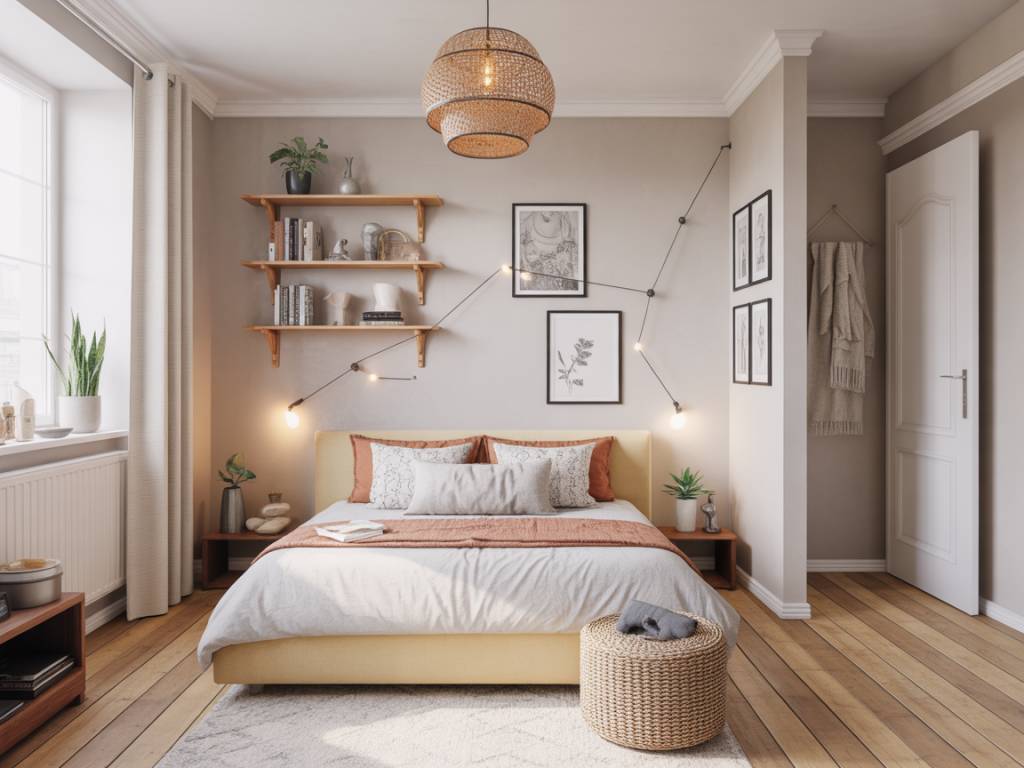
Why Smart Wall Decor Matters in a Tiny Home
In a tiny home, every square inch must work hard. The floor area is limited, so vertical surfaces quickly become some of your most valuable real estate. Smart wall decor is more than a styling detail; it is a way to add personality, texture, and warmth without sacrificing precious space for movement or storage. When chosen thoughtfully, wall art, shelving, and decorative accents can help your small home feel bigger, more organized, and genuinely yours.
This guide explores seven practical wall decor ideas that blend style with function. These strategies are designed for renters and homeowners living in studios, compact apartments, and small houses alike. You will find inspiration for wall-mounted storage, flexible gallery walls, and decor that doubles as lighting or acoustic treatment—always with the goal of maximizing space and minimizing clutter.
Use Floating Shelves as Functional Wall Decor
Floating shelves are one of the most efficient ways to decorate walls in a tiny home. They provide storage and display space while keeping the floor free. Because they can be styled in countless ways, they instantly bring character to blank walls.
To get the most out of floating shelves in a small space:
- Mix decor and everyday items – Stack your favorite books next to a scented candle, framed photo, or a small plant. The shelf becomes both practical and decorative.
- Play with symmetry and asymmetry – In narrow rooms, a symmetrical arrangement can feel calming. In more eclectic spaces, staggered shelves create a dynamic focal point.
- Go vertical – Install shelves from mid-wall toward the ceiling to draw the eye upward, which visually increases the height of the room.
- Choose light silhouettes – Slim, shallow shelves in white or wood tones reduce visual bulk, an important factor in small living rooms and compact bedrooms.
Look for minimalist floating shelves with hidden brackets or slim metal supports. They work well above desks, sofas, and even over doorways, transforming forgotten corners into meaningful displays.
Create an Adaptable Gallery Wall in a Small Space
A gallery wall is a classic wall decor idea, but it must be planned differently in a tiny home. The aim is to add visual interest without overwhelming the room. Instead of filling an entire wall from edge to edge, focus on a curated composition that leaves breathing room around it.
For a small-space-friendly gallery wall:
- Limit your color palette – Black-and-white art, warm neutrals, or two accent colors can keep the overall look cohesive.
- Vary frame sizes thoughtfully – Combine one or two larger frames with several smaller ones to avoid a cluttered feeling.
- Use lightweight frames or poster rails – These keep the arrangement visually airy and make it easier to rearrange later.
- Try removable hooks or strips – Ideal for renters who want flexible wall art without permanent holes.
Instead of only hanging traditional prints, incorporate functional pieces: a small wall calendar, a decorative memo board, or a framed textile. This approach turns the gallery wall into a living element of your home, evolving with your seasons and needs.
Maximize Wall Space with Pegboards and Grid Panels
Pegboards and metal grid panels are some of the most underrated tools for tiny home wall decor. They bring a sleek, modern look while offering endless customization. In a compact kitchen, entryway, home office, or craft corner, they offer both storage and style.
Consider the following ways to integrate pegboards and grids into your wall decoration strategy:
- Kitchen organization – Hang utensils, small pots, and measuring cups next to a trailing herb plant or a framed recipe card for a functional decorative wall.
- Entryway catch-all – Add hooks for keys, a mini shelf for sunglasses, and a clip for mail to keep clutter off your surfaces.
- Home office display – Combine pen cups, small shelves, and mood-board images to keep your desk clear while inspiring productivity.
- Creative studio – Display tools, ribbons, or art supplies as part of the decor, turning your hobbies into a visual feature.
Choose pegboards in wood or painted finishes that match your interior style. Keep color themes tight and avoid overloading the board. In a tiny home, negative space is just as important as the objects themselves.
Incorporate Wall-Mounted Lighting as Decorative Elements
Lighting is crucial in tiny homes. When lamps occupy valuable surfaces, the space can quickly feel cramped. Wall-mounted lighting—sconces, swing-arm lamps, and LED strips—provide both illumination and decorative value while staying off the floor and table tops.
When selecting wall lights as part of your decor:
- Prioritize plug-in sconces – These are perfect for renters and avoid the need for complicated electrical work.
- Look for sculptural shapes – Brass arms, globe shades, or minimalist black fixtures can act as wall art even when switched off.
- Use directional lights – Adjustable arms let you highlight artwork, shelves, or a reading nook, emphasizing your favorite corners.
- Layer warm and cool lighting – Careful use of temperature enhances textures on your walls, from brick to painted plaster.
Above a sofa or beside a bed, a pair of wall sconces can visually frame the area like art. In corridors or narrow entryways, a line of compact wall lights can add rhythm and make the space feel intentional rather than purely functional.
Choose Oversized Wall Art to Open Up a Tiny Room
It might seem counterintuitive, but large-scale wall art can make a tiny home feel more expansive. A single oversized piece often looks cleaner and less busy than many smaller artworks competing for attention. It creates a focal point, anchors the room, and helps simplify the visual landscape.
When using large wall art in a small home:
- Select calm imagery – Abstract pieces in soothing tones, minimalist line art, or large photographic prints of landscapes can add depth without chaos.
- Consider canvas prints or frameless pieces – They tend to be lighter and less bulky than heavy framed artworks.
- Match the scale to the furniture – Hang the art above a sofa, bed, or console so that it feels connected, not floating alone on the wall.
- Use mirrors strategically – An oversized mirror counts as wall decor too, reflecting light and visually doubling your space.
If you are worried about commitment, opt for wall tapestries or fabric hangings. They are lightweight, easy to swap, and can soften acoustics in rooms with hard surfaces.
Integrate Plants into Vertical Wall Decor
Plants bring life and freshness to small interiors, but floor planters can quickly become obstacles in a tiny home. Vertical plant displays and wall-mounted planters allow you to enjoy greenery without sacrificing circulation space.
To design plant-focused wall decor in a compact home:
- Use wall planters or pocket planters – Ceramic, metal, or fabric wall planters look decorative even before you add plants.
- Choose low-maintenance species – Pothos, philodendron, trailing ivy, and some ferns are good choices for beginners and busy households.
- Combine plants with art – Mix a couple of planters into a gallery wall or above a narrow shelf to add texture and movement.
- Mind drainage and water – Protect your walls with liners or select self-watering wall planters designed for indoor use.
Vertical gardens work particularly well in bright kitchens, bathrooms with adequate ventilation, or adjacent to windows in living rooms. They soften hard lines, purify the air, and reinforce the feeling of a tranquil sanctuary, even in the smallest of layouts.
Use Textiles, Panels, and Acoustic Wall Decor for Warmth
In small homes, noise and echo can be surprisingly noticeable. Hard surfaces reflect sound, making compact rooms feel harsh. Textiles and acoustic wall decor help absorb sound while adding color and pattern. They are especially effective in open-plan tiny homes where living, sleeping, and working zones overlap.
Consider these options to combine sound control with stylish wall decoration:
- Fabric wall hangings and tapestries – These introduce pattern and softness, working well behind a sofa or bed.
- Woven or macramé pieces – Ideal for boho or Scandinavian-inspired tiny homes, adding texture without depth.
- Acoustic panels in decorative shapes – Many brands offer hexagon or geometric panels in muted colors that double as art.
- Upholstered headboards mounted on the wall – In small bedrooms, a wall-mounted headboard feels luxurious while improving comfort and acoustics.
To maintain a cohesive look, repeat colors and materials from your furniture and rugs. In a tiny home, strong visual connections between elements are essential for creating a harmonious and uncluttered atmosphere.
By approaching wall decor as both an aesthetic and functional tool, you transform your tiny home into a highly efficient, character-filled space. From floating shelves to vertical gardens, each wall becomes an opportunity to express your style, store your essentials, and improve your day-to-day comfort—without wasting a single inch of floor space.